Renting in Tenerife: deposits, tenant rights and insurance

In short: for a long-term home rental the legal deposit is one month’s rent, and the landlord can ask for an additional guarantee of up to two months. Agency and contract fees are paid by the landlord. Leases can last up to five years (seven if the landlord is a company) if you want to stay. Tenant insurance protects your belongings and your liability towards the landlord and neighbours.
Tenerife attracts thousands of people every year who come to work remotely, retire or start a new life in the sun. Finding a long-term rental can be competitive, so knowing your rights and the usual paperwork helps you move quickly and safely. This guide covers long-term home rentals under Spain’s Urban Leases Act (LAU); holiday and seasonal lets follow different rules.
What you can be asked to pay when you sign
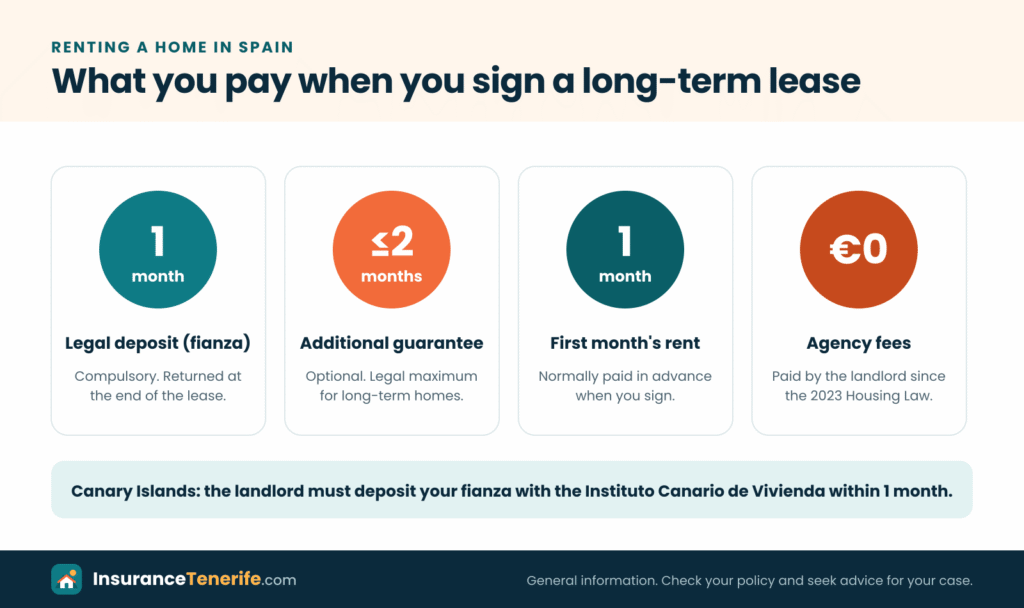
- Legal deposit (fianza): one month’s rent for a home. It is compulsory and is returned at the end of the lease, minus any justified amounts for damage or unpaid bills.
- Additional guarantee: the landlord may ask for an extra guarantee (cash or a bank guarantee), but for long-term home leases the law limits it to two months’ rent.
- First month’s rent, normally paid in advance.
- Agency and contract fees: since the Housing Law of 2023, the costs of property management and drawing up the contract are paid by the landlord, not the tenant.
In the Canary Islands, the landlord must deposit your fianza with the Instituto Canario de Vivienda within one month of signing. You can ask the landlord for proof that it has been deposited.
How long does a lease last?
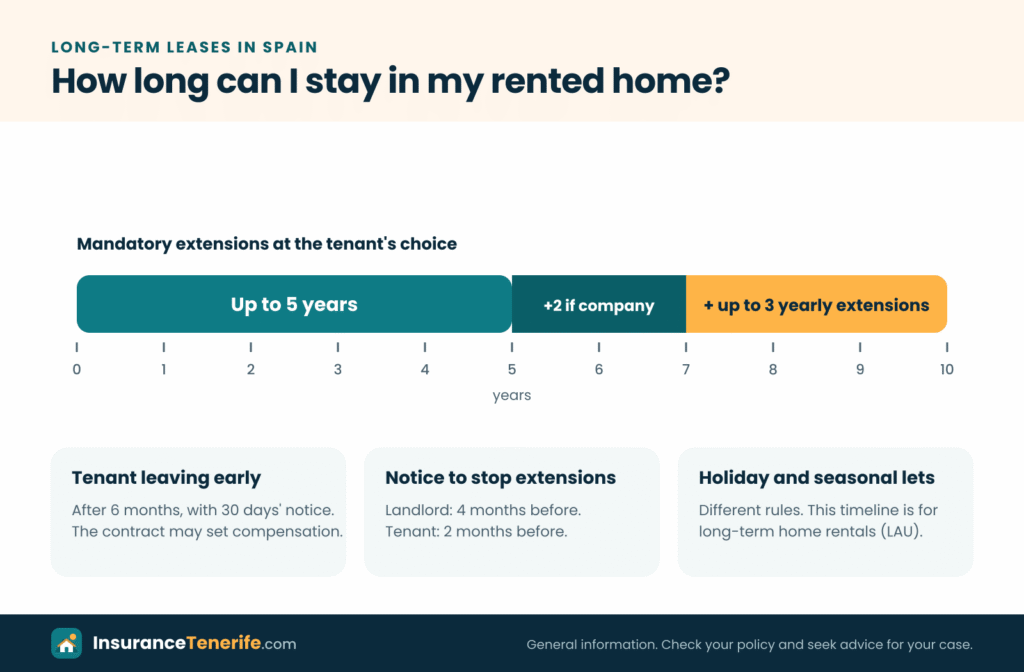
Even if the contract says one year, a long-term home lease is extended year by year at the tenant’s choice until it reaches five years, or seven if the landlord is a company. After that, if neither side gives notice (the landlord four months before, the tenant two months before), it is extended annually for up to three more years. As a tenant, you can usually leave after the first six months by giving 30 days’ notice; the contract may set a compensation for leaving early.

Move-in day: protect your deposit
- Ask for an inventory of furniture and appliances and sign it with the landlord.
- Photograph every room, including marks, stains and anything that does not work.
- Read the meters for electricity and water.
- Keep every payment receipt: pay by bank transfer, never in cash.
Why tenant insurance is worth it
The landlord’s policy normally covers the building, not your belongings, and not the damage you might cause by accident. If a fire starts in your kitchen or your washing machine floods the flat below, the landlord’s insurer can pay and then claim the cost from you. Tenant insurance covers:
- your belongings: furniture, laptop, clothes and bikes;
- your liability towards the landlord and neighbours;
- theft and home assistance (locksmith, plumber, electrician).
More and more landlords in Tenerife ask for a tenant policy before handing over the keys. Having one ready can help you get the flat you want, and it is usually one of the cheapest home insurances you can buy.
Other insurance to sort out when you move
If you are relocating to Tenerife, you may also need private health insurance (often required for residency) and car insurance once your car has Spanish plates. We can arrange all of them in English.
This article is general information about long-term home rentals and does not replace legal advice for your specific contract.
Need advice for your own case?
Our team will explain your options in English and compare several insurers for you, free of charge.
Get a free quote